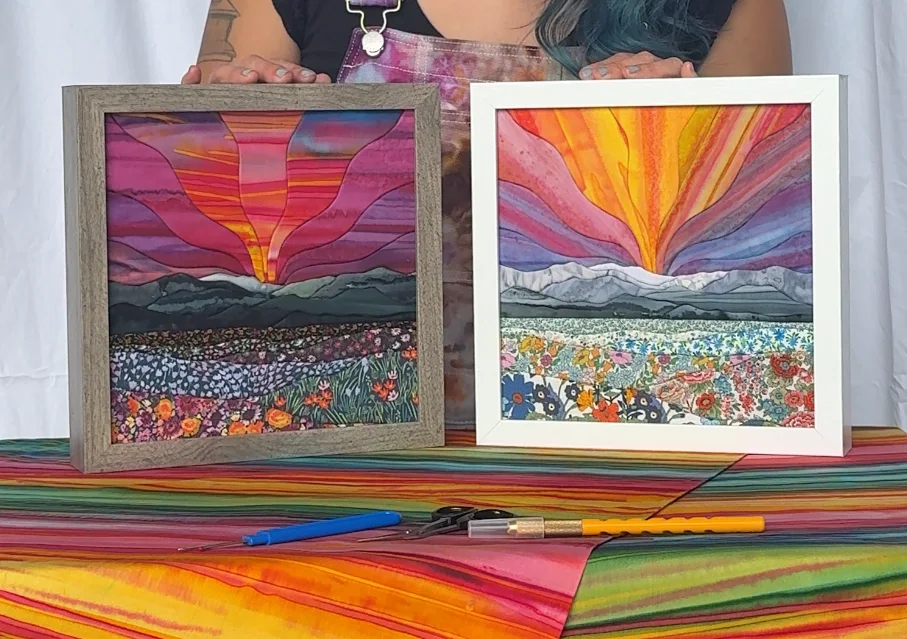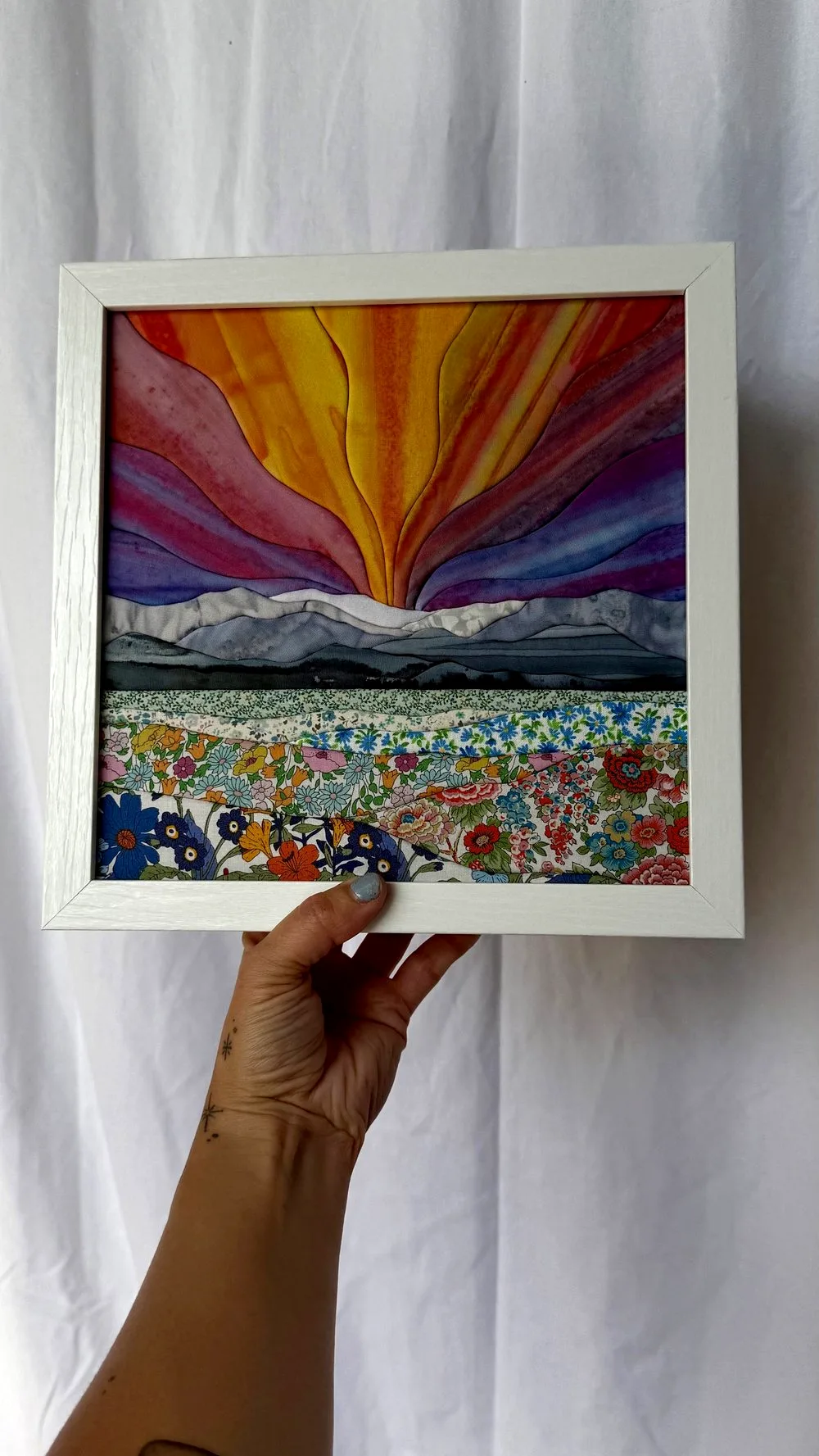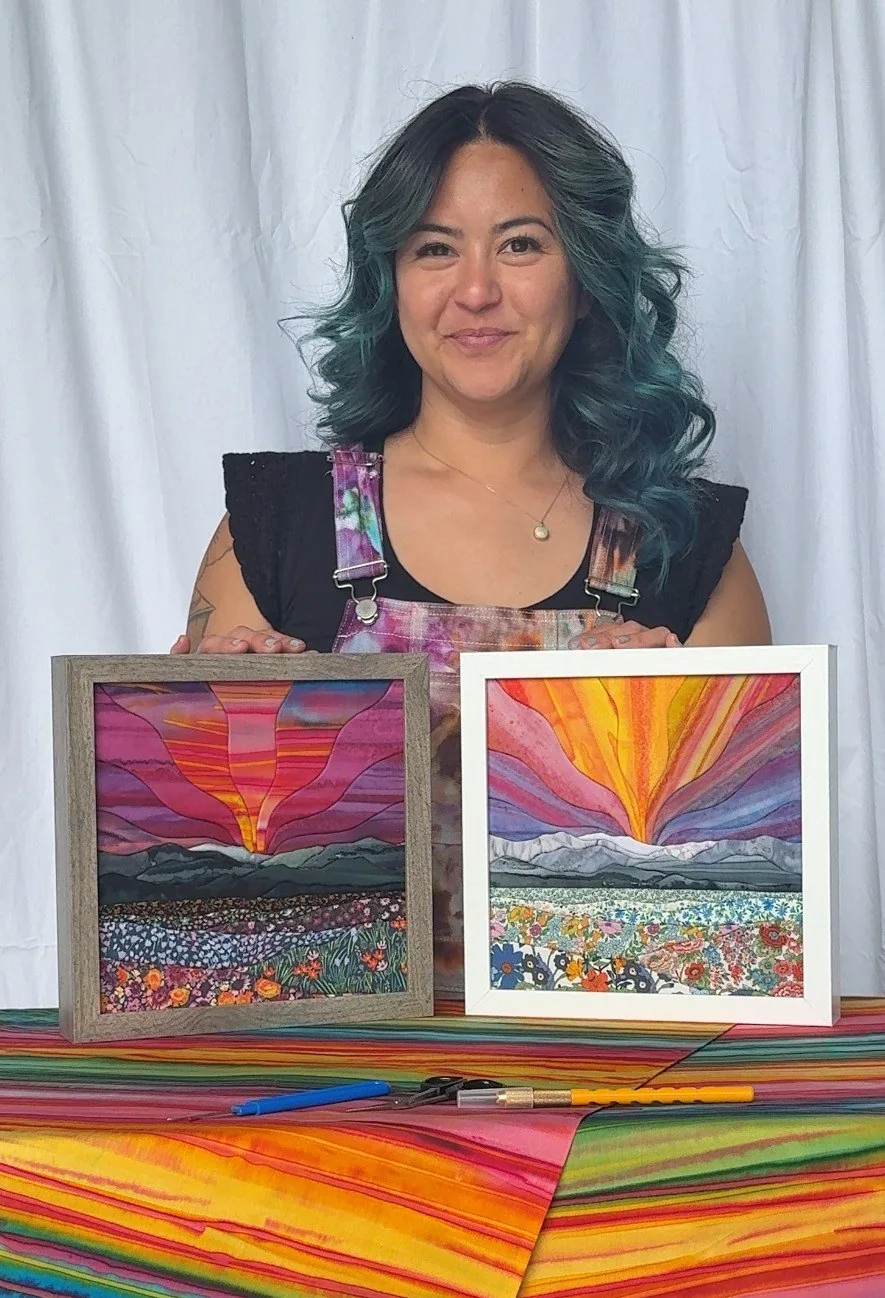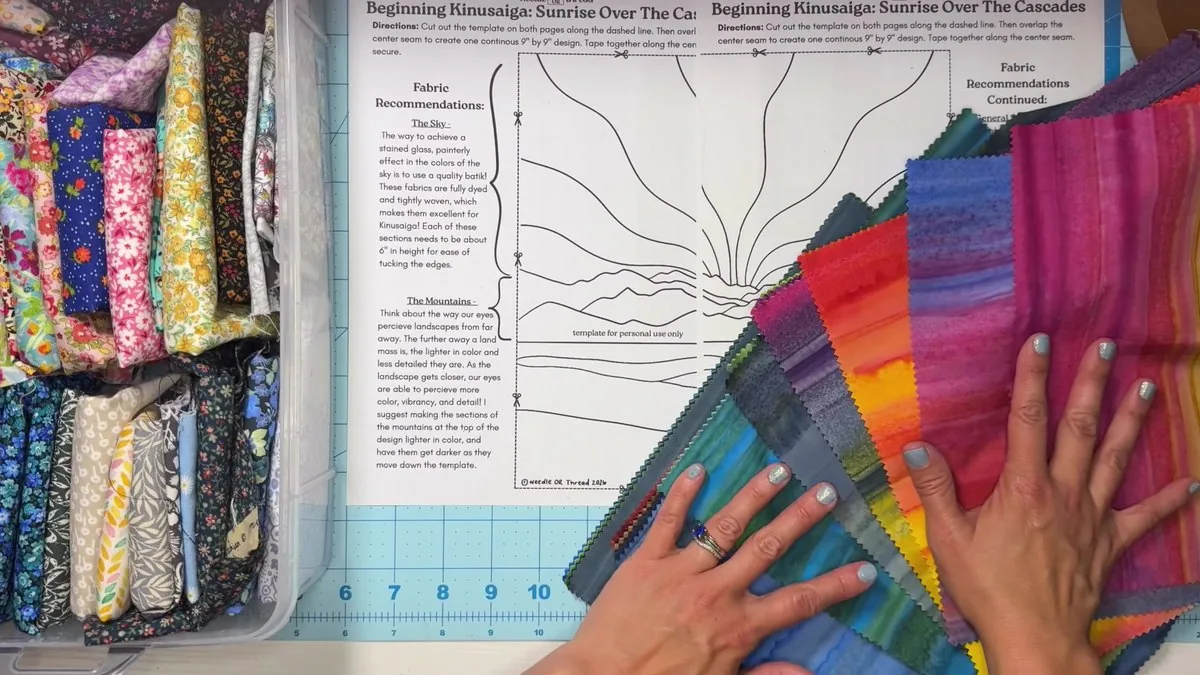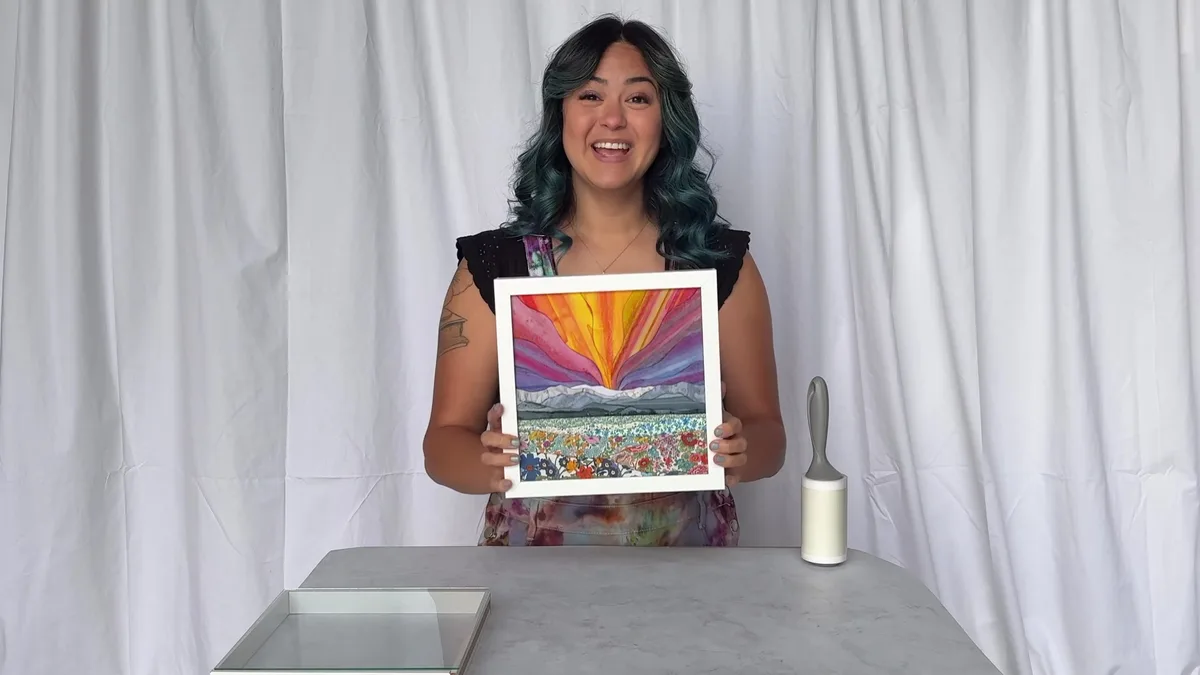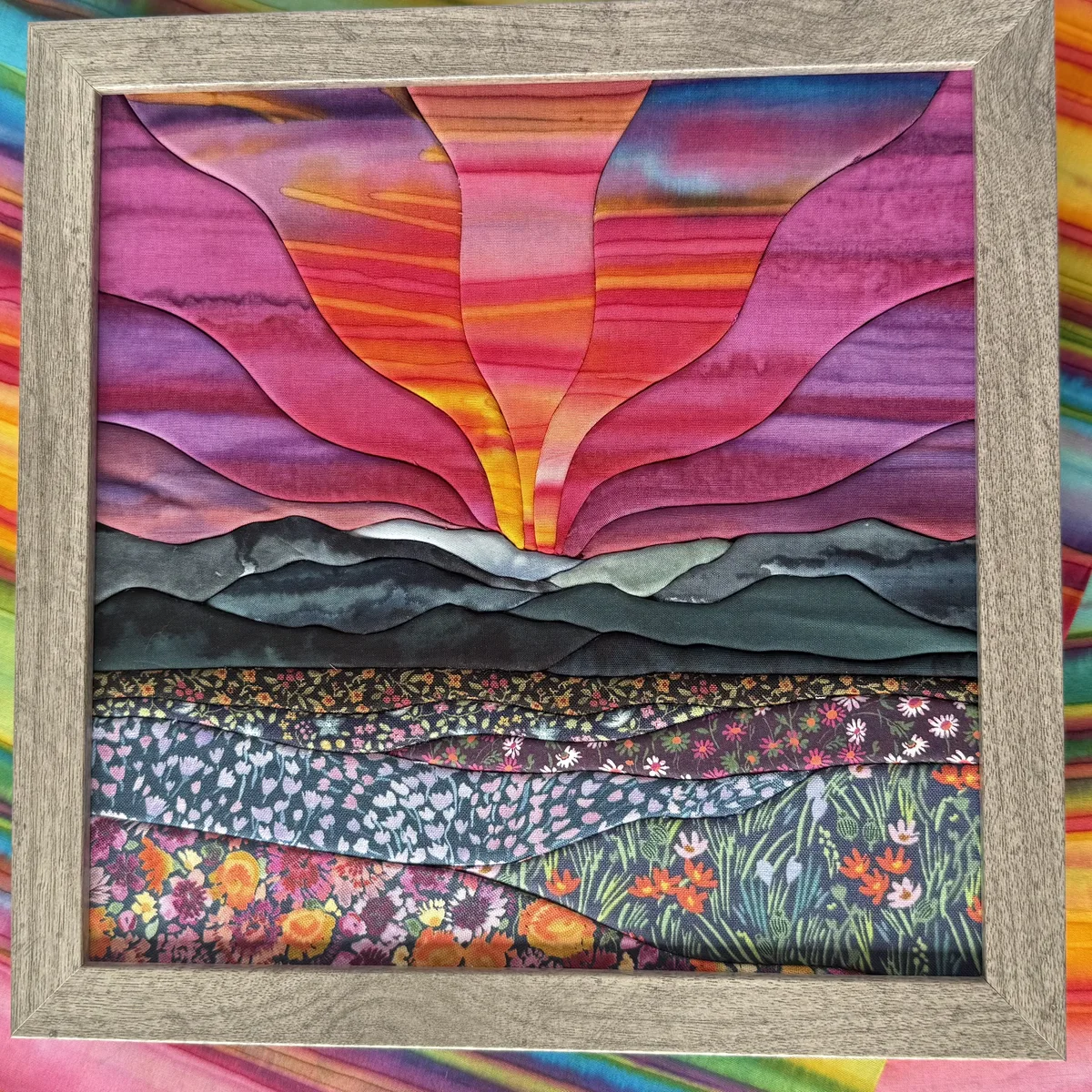
From across the room it reads as a painting. The sky has a gradient. The mountains recede into haze. The meadow looks like it runs back a mile.
Walk up to it and the surface is quilted. Every color in the picture is a piece of cloth.
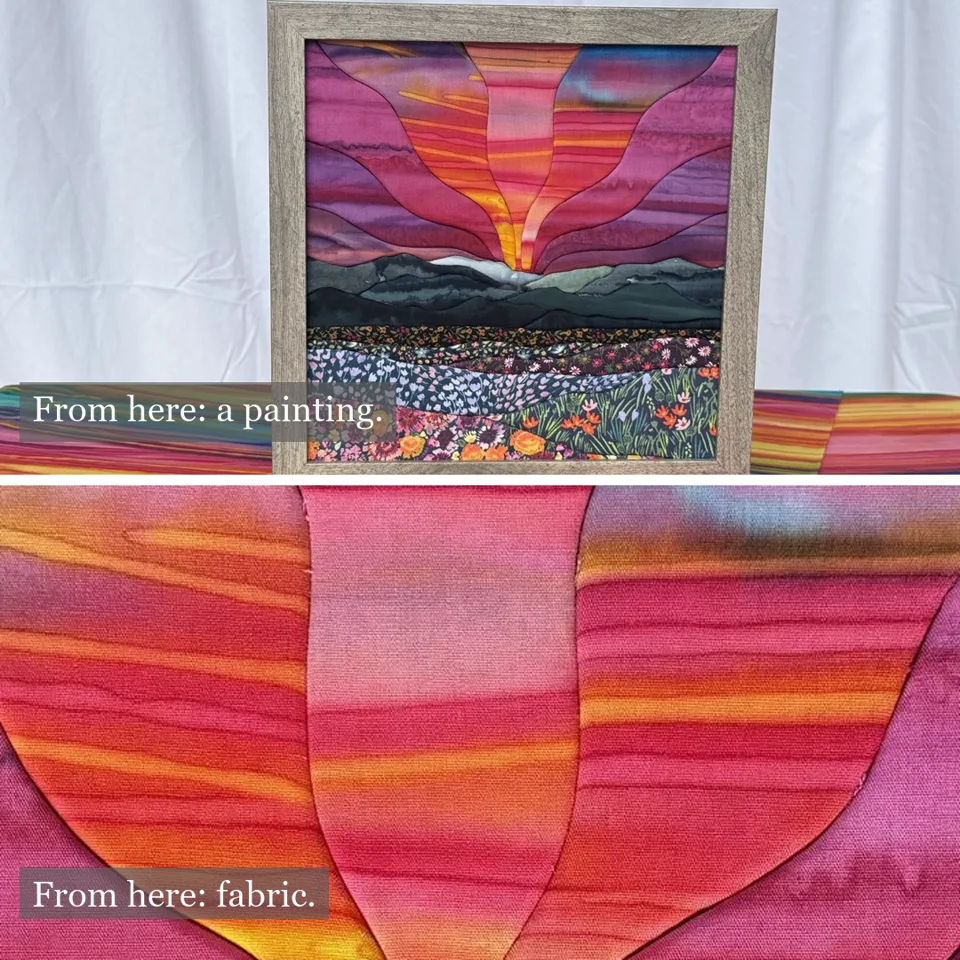
That is kinusaiga. Japanese artist Setsu Maeno created it in the 1980s, building on the centuries-old kimekomi tradition of tucking fabric into carved grooves. Hannah credits Maeno in the very first video of the course, and what she teaches is the process she has worked out over her own years of practice.
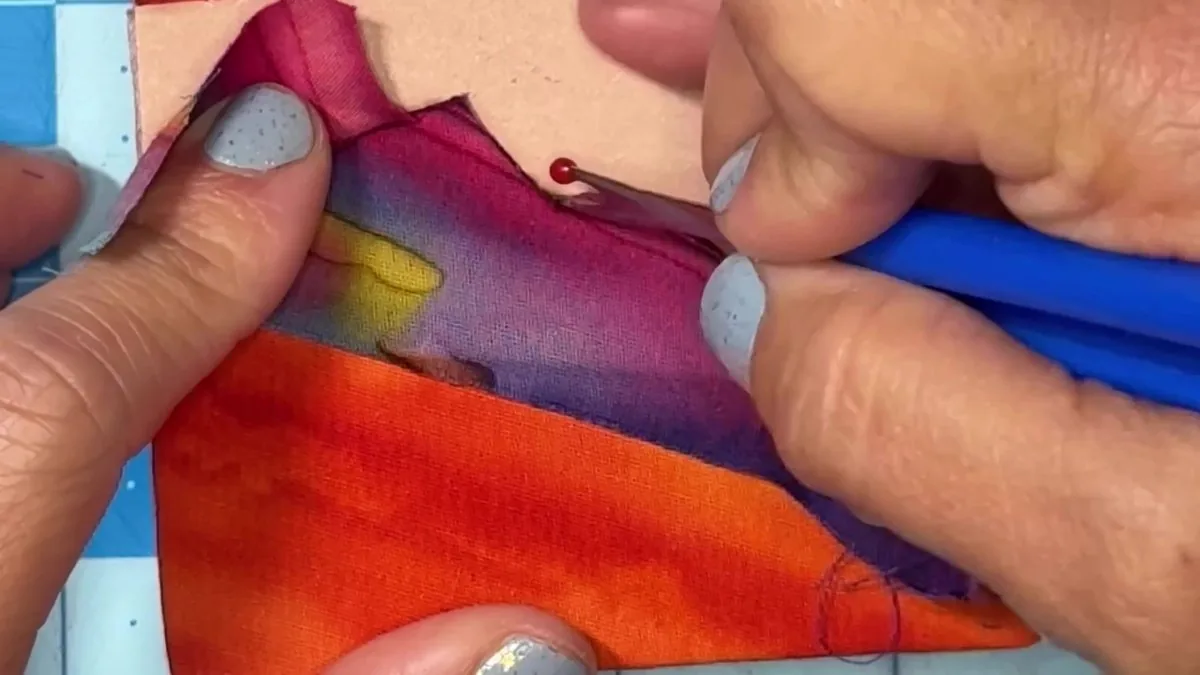
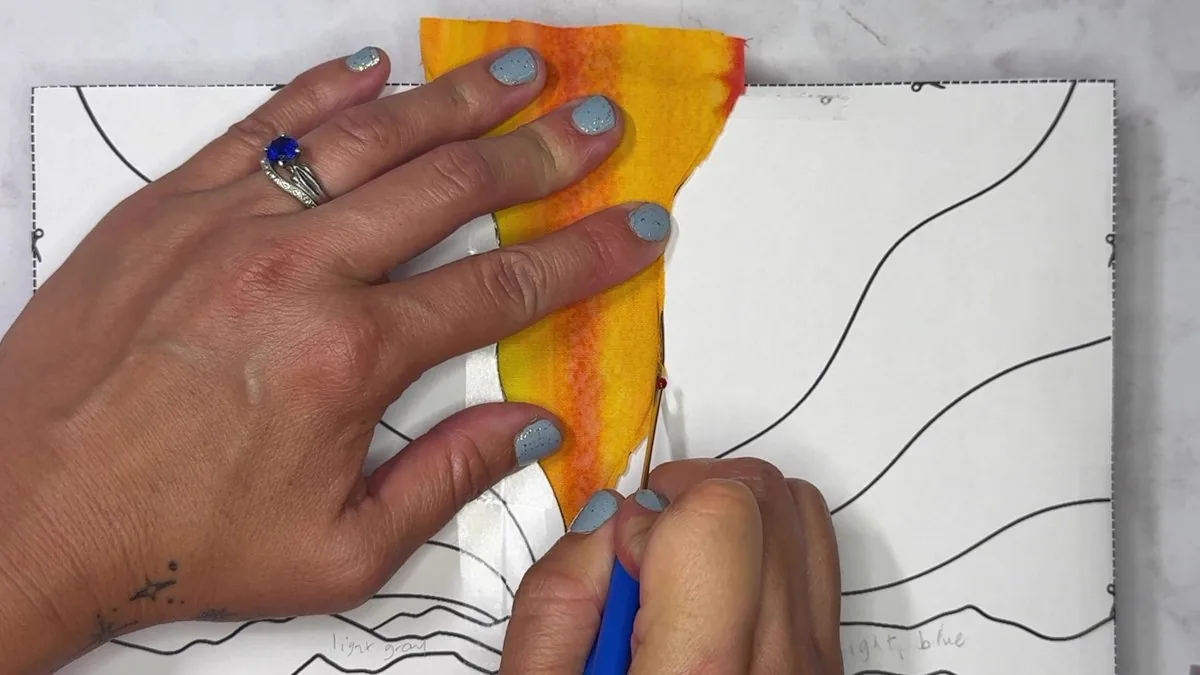
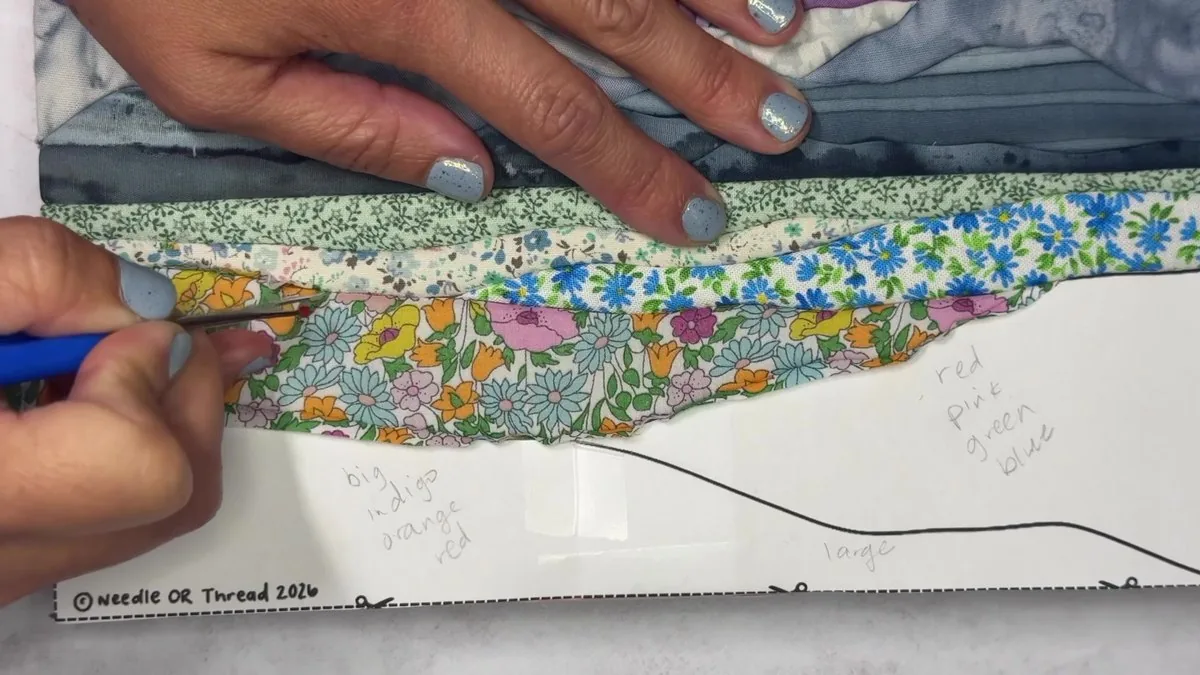
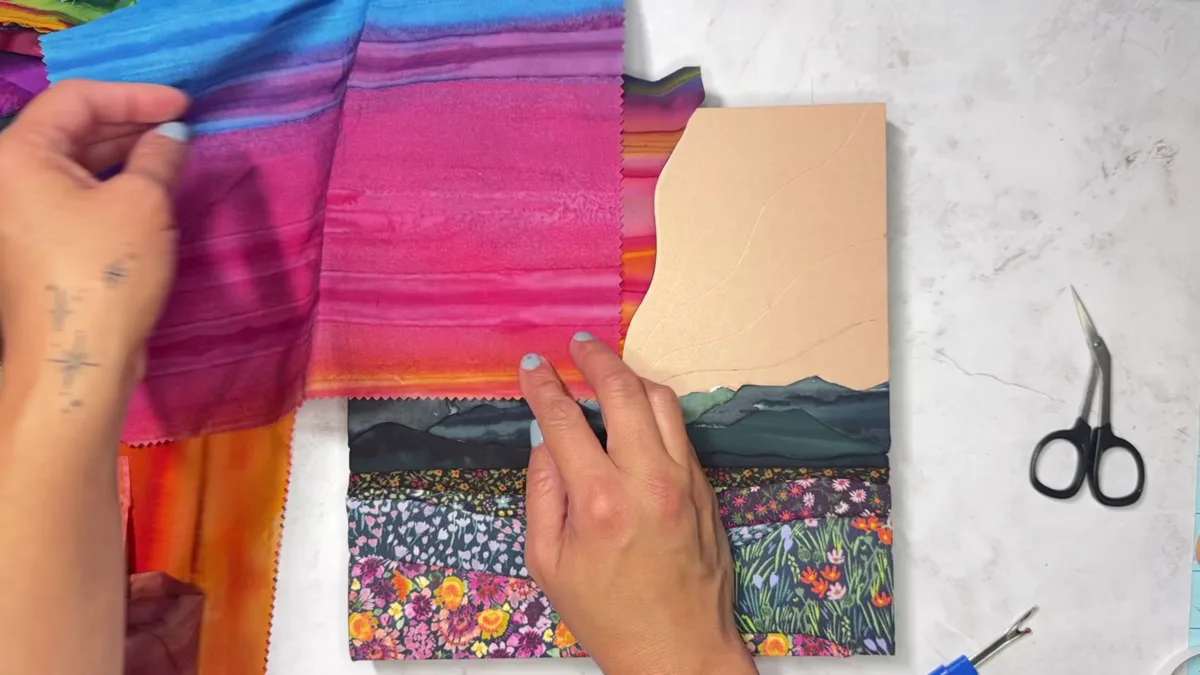
Nothing is drawn and nothing is painted. You carve shallow grooves into a foam board, following a printed template. You lay a piece of fabric over each section and press the raw edges down into the grooves with the back of a seam ripper. The edge vanishes. The fabric pillows up like a tiny quilt. Section by section, the picture appears.
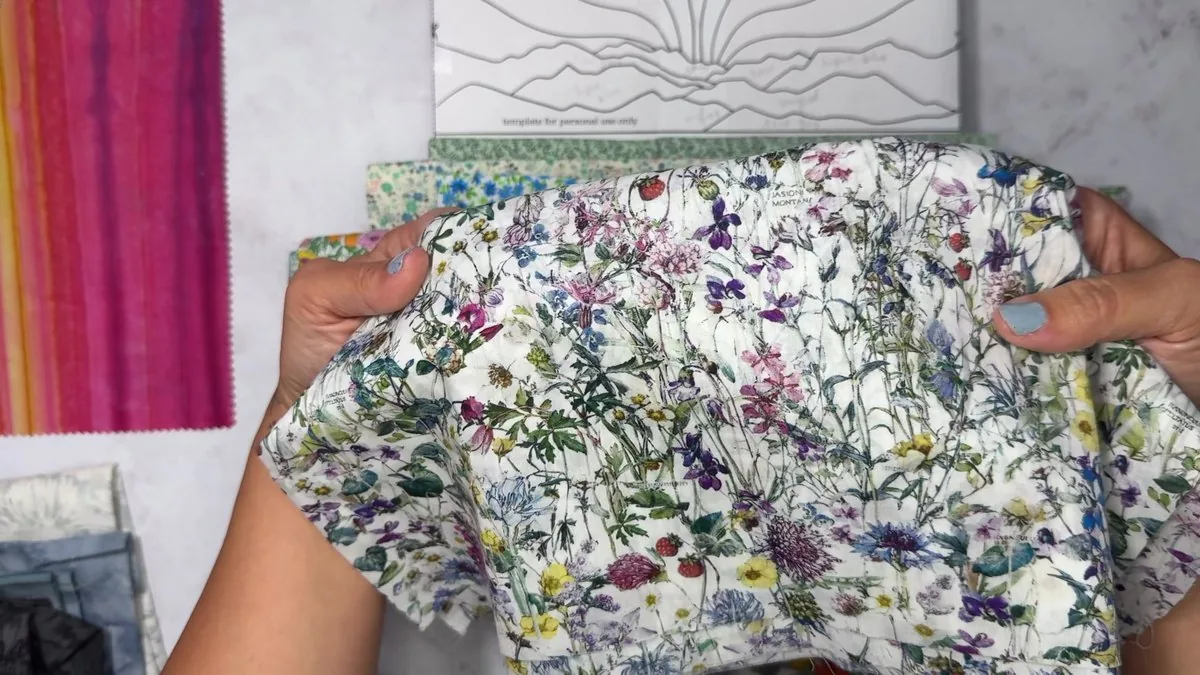
The painted look comes from the cloth itself. A striated batik already has the gradient dyed into it, so a single piece of fabric does the work a painter would need a loaded brush and a very steady hand for. Choosing the fabric is the artistic act. Tucking it in is the easy part.